Joint venture car prices collapse! Magotan’s price dropped by 77,000, Lion Platinum expanded its range by 109,900, and the inventory clearance war broke out.
Joint venture car prices have collapsed! The Magotan dropped RMB 77,000 and sold for RMB 129,900. The Lion sold for RMB 109,900. The Crown Road Odyssey dropped RMB 76,000 to RMB 76,000. The Bora fell below RMB 80,000. It is clearing the inventory to fight against domestic inroads. Buying a car now is the most cost-effective.
Walking into the FAW-Volkswagen 4S store, the sales consultant pointed to the price board on the wall, with a hint of helplessness in his tone: “The Magotan 330TSI elite model, the guide price was 194,900, has now been directly reduced to 129,900, with a discount of 65,000. If you replace it, you can save another 6,000, and you can drive away with a 20% down payment.” This is no longer a traditional promotion, but a complete collapse of the price system. The benchmark B-class car that once had to wait in line has now become the “diving champion” with the largest price reduction.
In Kia’s showroom, the price tag of the new Lion is particularly eye-catching – starting from 109,900 yuan. This price is 45,000 yuan lower than the official guide price of 154,900 yuan, which is equivalent to a 30% discount. The sales manager said with a wry smile: “This car cost more than 150,000 yuan last year, but now it has dropped to 109,900 yuan. We sell each one at a loss, but the inventory is tight, so we can’t sell it.” Even more exaggerated is the 1.5T Premium Smart Edition, with an official guide price of 189,800 yuan. Now the refresh price is only 120,800 yuan, with a discount of up to 69,000 yuan.
Honda’s position is also losing ground. CR-V, once the “price benchmark”, has a limited-time price starting from 145,900 yuan in 2026. Compared with the official guide price of 185,900 yuan, the discount reaches 40,000 yuan. In 4S stores in Beijing, sales will directly tell consumers another set of algorithms: the entire series is discounted by 48,000 yuan, the entry-level bare car price drops to 137,900 yuan, and the terminal discount can reach up to 53,800 yuan. From a price increase of 30,000 yuan to a price reduction of 40,000 yuan, this increase is equivalent to the car price evaporating more than 70,000 yuan out of thin air.
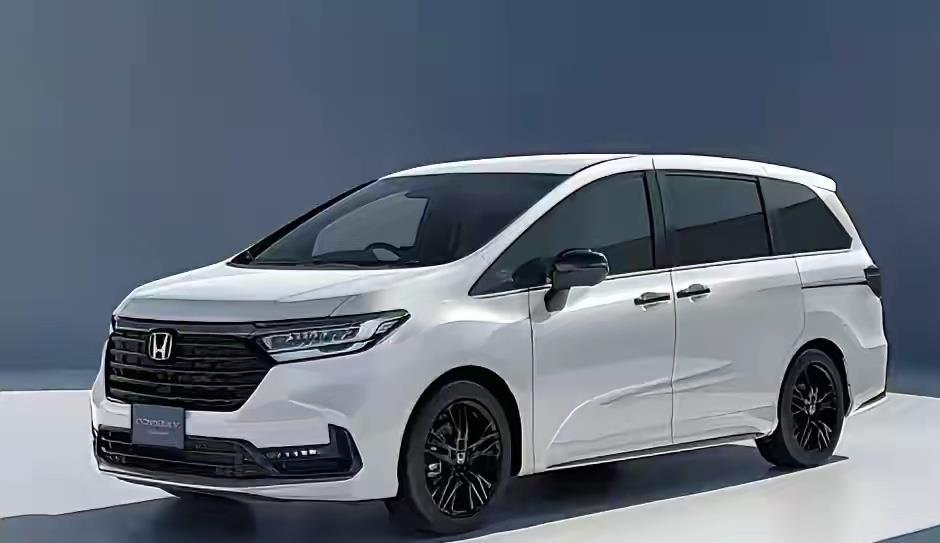
Guangqi Honda’s Crown Road and Odyssey were not spared either. The Crown Road has been reduced by RMB 70,000, with a starting price of RMB 169,800; the Odyssey has been reduced by RMB 60,000, with a starting price of RMB 175,800. These two popular models, which once required a price increase, are now priced in half. The Volkswagen Bora has even been officially discounted by RMB 30,000, with the terminal price falling below RMB 80,000. You can drive away with a German family sedan for RMB 82,900.
Behind this price avalanche are shocking inventory figures. According to a report released by the China Automobile Dealers Association in January 2026, the total domestic automobile inventory has exceeded 3.5 million vehicles, an increase of 18.3% compared with the same period last year. Among them, the inventory of joint venture fuel vehicles accounts for 62%, and the inventory digestion cycle reaches 57 days, far exceeding the industry-recognized reasonable digestion cycle of 45 days. Another set of data shows that the national passenger car industry inventory reached 3.57 million vehicles at the end of January 2026, an increase of 580,000 vehicles compared with the same period last year. The inventory digestion cycle is as long as 66 days, far exceeding the industry’s safe range of 40 to 50 days.
What does 3.57 million vehicles in inventory mean? This means that even if all car manufacturers stop production from now on, it will take more than two months to sell out the existing cars in stock. These inventories occupy more than 450 billion yuan in funds and generate interest every day. The pressure on dealers has become unbearable, and the industry-wide GP1 (gross profit margin on naked car sales) has dropped to -21.5%. This means that for every car sold by a dealer, the average dealer will lose more than one-fifth of the car’s price in the bare car sales process alone.
A general manager of a 4S store of a German joint venture brand in Pudong, Shanghai, said frankly that even though the maximum discount for bicycles exceeds 80,000 yuan, the inventory cycle in the store has been extended from 45 days last year to 68 days, but the customer flow continues to decline. More than 52.6% of dealers fell into losses, and the industry’s loss ratio exceeded 50% for the first time. The main engine manufacturers did not slow down the production pace, but instead passed the market risks to the sales terminals through the “stocking up” strategy.
The impact of domestic new energy vehicles is another fatal factor. In the first quarter of 2026, Geely Auto surpassed BYD by a narrow margin and won the domestic quarterly sales championship. This is the first time that BYD has been pulled off the throne after sitting on the top sales list for 40 consecutive months. At the same time, the total sales volume of Chinese automakers surpassed Japan’s for the first time, ending its 25-year reign as the global sales leader. The market share of independent brand new energy has exceeded 60%, while the penetration rate of mainstream joint venture brand new energy is only 4.5%, even as low as 3.1% according to some statistical standards.
Walk into any domestic new energy exhibition hall and you will see a completely different scene. Leapmotor sold 50,000 vehicles in March, a year-on-year increase of 35%. In the price range of RMB 150,000 to RMB 200,000, domestically produced cars use laser radars and large batteries to engage in price wars, rubbing “Wei Xiaoli” on the ground. Li Auto has successfully extended its range and converted to pure electric vehicles, and the i6 series has become a hit. Although the growth rate is not strong, it has high quality, good profits, and strong user loyalty.
Joint venture brands have completely lagged behind in terms of intelligent configuration. When you get into a domestic new energy vehicle, what you see is a 33-inch 9K surround-type Super Retina curved screen, L2+ assisted driving, full-scenario voice control, and seat heating, ventilation and massage. Joint venture cars in the same price range may not even have a decent central control screen, let alone a smart cockpit and autonomous driving. The result of consumers voting with their feet is that the independent TOP7 took over the top 7, with a share of 67.9%; the only joint ventures left were GAC and Tesla, with a share of 24.9%. Volkswagen, Toyota, and Honda plummeted 25%-38%, and the era has really passed.
Policy pressure is the third pressure. The National VII emission standards have been put on the agenda, and the industry generally predicts that the formulation period of the National VII standards will be completed in 2026-2027. Nitrogen oxide emission limits are expected to be reduced by another 60% compared with the National VI stage, particulate matter standards will be narrowed simultaneously, and new controls will be added on unconventional pollutants such as ammonia leakage and nitrous oxide. This means that many existing fuel vehicles either cannot meet the new standards or require high upgrade costs.
According to the implementation plan issued by the Ministry of Ecology and Environment, starting from January 1, 2026, all newly produced, imported, sold and registered light vehicles nationwide must comply with National VII standards. Compared with the National VI b phase, the National VII lowered the nitrogen oxide emission limit by 60% and the particulate matter emission limit by 58%. At the same time, strict requirements for actual road driving pollutant testing were added. Industry estimates show that the manufacturing cost of each fuel vehicle may increase by 20,000 to 30,000 yuan.
The National 7 version of traditional fuel vehicles needs to be equipped with a more advanced exhaust gas treatment system, and the cost may increase by 8,000-15,000 yuan, which makes the existing National 6 models must be cleared as soon as possible. Faced with this fatal change, the response strategy of car companies has become extremely clear: accelerate the clearance of existing fuel models, exchange for cash flow with price cuts, and reserve a window period for transformation.
The detailed rules for trade-in subsidy in 2026 have also been implemented, and the 62.5 billion yuan of state subsidy funds are directly and accurately tilted: the maximum subsidy for scrapping old cars and buying new energy vehicles is 20,000 yuan, and the maximum subsidy for buying fuel vehicles with 2.0 liters and below is 15,000 yuan; if you replace a new car, you can get 15,000 yuan for new energy vehicles and 13,000 yuan for fuel vehicles. The policy balance is clearly tilted towards new energy, and the living space of fuel vehicles is further compressed.
The price system of luxury brands is also being reconstructed. The price of the BMW 7 Series is reduced by up to 270,000 yuan, and the price of the 530Li is reduced by more than 160,000 yuan. The Mercedes-Benz E-Class is discounted by up to 135,000 yuan, and the GLB is as low as 144,900 yuan. The price of Audi A6L fell below 280,000 yuan, and the price of A3 fell to less than 100,000 yuan. Not only has the official guide price of the BMW 3 Series been reduced from RMB 319,900 to RMB 399,900 to RMB 258,000 to RMB 338,000, terminal dealers have also provided an additional discount of RMB 35,000 to RMB 54,000.
The Cadillac XT4 has a flat price starting from 159,900. This price could only buy a compact joint venture SUV a few years ago. There is news that the Toyota Avalon is on sale for RMB 120,000. Although it is officially denied, the terminal discount has indeed reached an unprecedented level. The terminal price of Buick Envision Plus has been reduced to 164,900 yuan, which is a full 65,000 yuan lower than the guide price.
Dealers’ plight is no longer just a matter of losing money selling cars. The industry-wide GP1 (gross profit margin on naked car sales) has dropped to -21.5%, which means the more you sell, the more you lose. But if it is not sold, the interest on the funds occupied by the inventory will increase every day. A dealer owner did some calculations: There are 200 cars in stock in the store, and each car takes up an average of 150,000 yuan, and the total capital occupied is 30 million yuan. Calculated based on an annualized interest rate of 5%, the daily interest is 4,100 yuan. The two-month inventory cycle costs 246,000 yuan in interest alone.
Even more frightening is the ripple effect on the second-hand car market. New car prices have plummeted, directly impacting the residual value of used cars. A Magotan bought last year cost 220,000 yuan. Now a new car only costs 129,900 yuan. How much can a used car sell for? Second-hand car dealers now have a headache when they see cars from joint venture brands. The car prices have dropped again and again, but they still can’t sell them. The entire second-hand car market is trapped in a vicious cycle: new car prices drop → second-hand cars depreciate → consumers are less willing to buy second-hand cars → second-hand car dealers lower prices even more → car owners are even less willing to sell their cars.
Consumer mentality has also undergone subtle changes. In the past, when buying a car, you looked at the brand, the value retention rate, and the face. Now, everyone only thinks about economics. With the same budget, should I buy a joint venture B-class car with a reduced price, or a domestic new energy vehicle with full configuration? When the brand halo of joint venture cars fades, and when the quality and technology of domestically produced cars catch up or even surpass them, consumers’ choices will naturally shift.
Walk into BYD‘s showroom and you will see a completely different scene. The Qin PLUS Honor Edition starts at 79,800 yuan, but its configuration is much higher than that of joint venture cars in the same price range. Blade battery, DiLink intelligent network connection system, and L2-level assisted driving, these features that require extra money for joint venture cars have become standard features on domestic cars. More importantly, new energy vehicles are exempt from purchase tax, the charging cost is only one-tenth of that of fuel vehicles, and the maintenance costs are also lower.
Geely’s Galaxy series has accurately entered the household market with its Thor electric hybrid technology. The Jikrypton brand has ranked first in sales in the 500,000-class high-end SUV field for many consecutive months, with an average transaction price of over 530,000. This strategy of “fuel + new energy dual-line development, full bloom of high-end and mid-range” is exactly the result of fierce competition. It only takes an average of 18 months for Chinese car companies to go from project establishment to mass production. This speed is unimaginable for joint venture brands.
Joint venture brands are also trying to fight back. The Nissan Teana is equipped with the Hongmeng cockpit, and Mercedes-Benz cooperates with Momenta to develop an intelligent driving system. But these make-up efforts pale in comparison to the technology that domestically produced cars are already two generations ahead of. While domestically produced cars are already discussing 800V high-voltage platforms, silicon carbide electric drives, and urban NOA, joint venture cars are still struggling with whether to install the 8155 chip.
Market concentration has reached unprecedented heights. In 2025, the top ten in the industry will account for more than 74% of the market share, and this proportion is still accelerating. There are only 9 domestic new energy vehicle companies that sell more than 30,000 vehicles in a single month, 14 with monthly sales exceeding 10,000 vehicles, and the remaining more than 100 brands have monthly sales of less than 10,000 vehicles. Industry expert Cui Dongshu made it clear that monthly sales of 30,000 yuan is now a life-or-death line. By 2027, this line will rise to 40,000-50,000, and those who cannot reach it will basically have no way to survive.
Even more cruel is the profit differentiation. At present, among the more than 120 new energy brands in China, only three, BYD, Ideal and Leapao, have achieved full-year profits, while the rest have all suffered losses. It is normal for those niche brand bicycles to lose 50,000 to 150,000 yuan. The more they sell, the more they will lose. Once the financing is cut off, they will die immediately. Since 2025, more than 20 new energy brands have completely withdrawn, including former “Internet celebrities” such as Byton, Youxia, Ziyoujia, and Tianji.
The situation of joint venture brands is also not optimistic. Honda suffered its first annual loss in 69 years since its listing due to adjustments to its electrification strategy, with a net loss expected to reach 690 billion yen in fiscal 2026. In the Chinese market, sales of new energy models from Toyota, Honda and other brands are still sluggish even after price cuts – FAW Toyota bZ3 sold 22,600 units in 2025, a year-on-year decrease of 55.6%. Skoda has confirmed its withdrawal from the Chinese market in March 2026, and the next joint venture brand to fall may be right around the corner.
The cruelty of this price war can be seen from the response strategies of various brands. Weilanda launched the AIR version, which canceled the 8155 chip and other configurations to reduce costs. The 2026 FAW-Volkswagen Bora has a direct price reduction of RMB 30,000, and the entry version is only RMB 82,900 with no reduction in configuration. GAC Toyota Veranda followed up with price cuts. Behind these actions are passive reactions to market changes.
Financial packages have also become an important promotional tool. 20% down payment and 60-month installment become standard. Zero interest rates, low-interest loans, and discount interest policies emerge in endlessly. Some brands have even launched a “buy back after three years” plan, promising to buy back vehicles at a certain price after three years to reduce consumers’ concerns about buying cars. However, these financial measures only delayed the outbreak of the problem and did not solve the fundamental problem.
Consumers’ car purchase decision-making cycle is lengthening. In the past, you might place an order after seeing it two or three times, but now you have to see it five or six times to compare price, configuration, and service. It is becoming more and more difficult for sales consultants to close deals, but with the same workload, the volume of deals is declining. Some 4S stores have begun to transform into after-sales services, relying on repair and maintenance to make up for losses in new car sales.
Second-level dealers and automobile trading companies are having an even harder time. They do not have subsidy support from OEMs, have weak financial strength, and have poor ability to resist risks. Many small-scale automobile trading companies have closed down, and the rest are struggling to support themselves. The entire automobile circulation chain is under tremendous pressure.
Upstream suppliers are also affected. Parts orders have decreased, payment collection cycles have lengthened, and cash flow has been tight. Some parts companies that supply joint venture brands have begun to supply domestic new energy brands. The reconstruction of the entire industry chain is quietly happening.
When this price war reaches this level, it is no longer a simple market competition, but a battle for survival. For joint venture brands, lowering prices is a helpless move, but not lowering prices means waiting for death. For domestic brands, this is an excellent opportunity to expand market share, but they must also be wary of the decline in profits caused by price wars. For consumers, now is a good time to buy a car, but they must also consider the vehicle’s value retention rate and follow-up services.
Walking into any 4S store, you can feel this tense atmosphere. There is both expectation and anxiety in the eyes of the sales consultant. He hopes to close the deal but is worried about losing too much. Consumers compare back and forth in the exhibition hall and calculate various discount plans. Financial personnel are calculating various financial plans in front of the computer, trying to find the delicate balance point.
Inventory cars fill the parking lot, some of which have been parked for more than three months. The car paint loses its luster due to wind and sun, the battery needs to be charged regularly, and the tires need to be rotated regularly. These silent inventories consume funds every day and remind everyone: this war is not over yet.
The number on the price tag is still changing. Today it is reduced by 10,000, and tomorrow it may be reduced by 5,000. The sales manager’s mobile phone is constantly flooded with price reduction information from various brands. Who has cut prices again, who has launched a new financial plan, and who has the greatest inventory pressure. This information spreads rapidly among dealers, creating an invisible pressure.
The used car market is even more deserted. The once bustling trading market is now deserted. When car dealers get together to chat, the topic is always about the price reduction of new cars. The car closing price dropped again and again, but still no one came to buy it. Some car dealers have begun to transform into new energy used cars, but they also face the problem of large price fluctuations.
The entire auto industry is experiencing pain. From OEMs to dealers, from suppliers to used car dealers, every link is under pressure. But this is the law of market economy, survival of the fittest and survival of the fittest. Those companies that can quickly adapt to changes will survive this transformation.
Consumers have more and more choices and their requirements are getting higher and higher. They no longer only look at the brand, but also value product strength, intelligence, and service experience. Those brands that still cling to old concepts are destined to be eliminated by the market. Those brands that can truly understand consumer needs and provide valuable products will win the future.
The lights in the exhibition hall are still bright, and the sales consultant’s smile is still enthusiastic. But everyone knows that the industry is undergoing a profound transformation. The price war is just an appearance. Behind it is the choice of technical route, the reshaping of the market structure, and changes in consumption habits. This transformation has just begun, and more intense competition is yet to come.
Walking in the automobile city where 4S stores gather, you can see various promotional banners. “70,000 direct discount”, “limited time offer”, “clearance special offer”, these slogans are particularly dazzling in the sun. There are not many customers entering the store, but everyone is extremely cautious. They hold their mobile phones, compare prices on various platforms, and calculate various preferential plans.
The sales consultant patiently explained everything from vehicle configuration to financial solutions, from after-sales service to value retention rate. But the customer’s questions are always very direct: “Can it get any cheaper?” “Other stores are five thousand cheaper than you.” “I’ll think about it again.” It becomes increasingly difficult to close a deal, but life goes on.
The stock car sits quietly in the parking lot, waiting for the owner willing to take it home. Some cars may never wait and end up being shipped back to the OEM or dealt with to a leasing company at a lower price. This is the cruelty of the market and the charm of the market.
The price war continues and no one knows when it will end. But one thing is certain: after this baptism, the Chinese automobile market will become more mature, consumers will receive more benefits, and the industry will move towards a healthier development path. And those companies that can survive will become stronger.